Source chainsaw chain for Wood Cutting, Tree Felling, and Logging
Explore 30 listings for chainsaw chain featuring varied pitches like .325 and 3/8 inch. Buyers can compare specifications, materials such as carbon steel, and customization options from verified manufacturers in China.
Key considerations
Products List


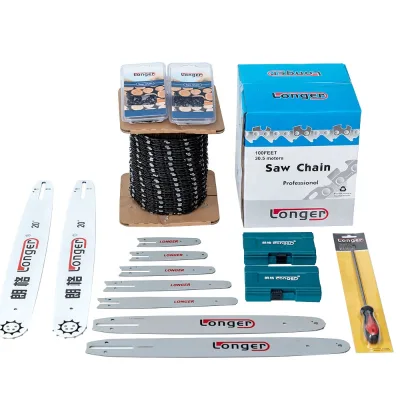
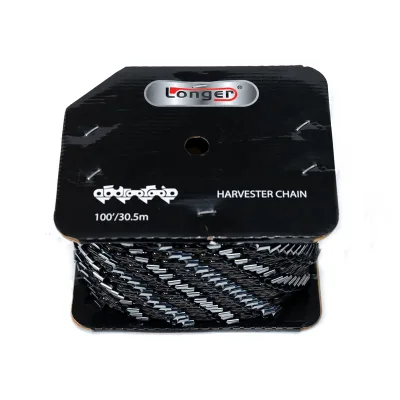
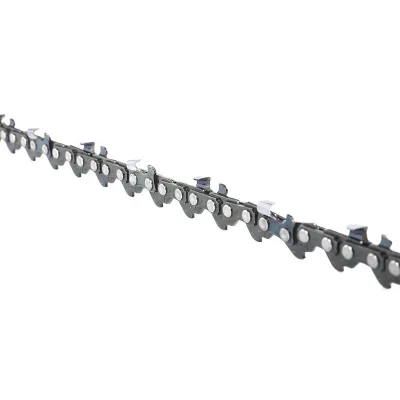
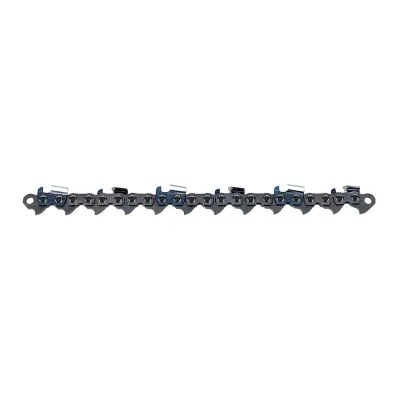


Comprehensive Sourcing Guide
Strategic Sourcing Guide for Industrial Chainsaw Chains
The global market for chainsaw chains presents a complex landscape for B2B procurement professionals, characterized by a wide variance in technical specifications, material grades, and compliance requirements. Sourcing decisions in this sector must be grounded in precise technical verification rather than marketing generalities. The core product category encompasses various configurations, including full-chisel and semi-skip designs, with specific pitch and gauge requirements that dictate compatibility with existing power equipment. Buyers must navigate a supply chain where product attributes such as the "325", "404", and "3/8" P" models are standard, yet the underlying quality and manufacturing standards vary significantly between suppliers. This guide provides a structured approach to evaluating chainsaw chain suppliers, focusing on technical due diligence, certification validation, and cost structure analysis based on observable market data.
Technical Specifications and Compatibility Verification
The primary technical differentiator in chainsaw chain procurement is the pitch and gauge, which must align perfectly with the guide bar and sprocket of the target saw. Based on observed market data, the standard pitch configurations include .325", 3/8", and .404". These dimensions are not merely nominal; they represent the distance between rivets and must be matched with exact precision to ensure operational safety and cutting efficiency. The chain gauge, often referred to as the thickness of the drive link, is equally critical. Procurement teams should verify that the supplier explicitly lists the pitch in their product specifications, as mismatches can lead to premature wear, chain derailment, or catastrophic equipment failure.
Beyond pitch, the chain structure and tooth design are vital performance indicators. The market features "Top Chain" structures designed for specific applications, such as the MS 070 sawchain intended for heavy-duty wood cutting. The material composition is another key variable; while some products are fabricated from Carbon Steel, others utilize Stainless Steel or Alloy compositions to enhance durability and corrosion resistance. Buyers must distinguish between "First grade sawchain" and lower-grade alternatives, as the material grade directly influences the lifespan of the product under high-stress conditions. The finish applied to the chain, whether Black, Zinc, or Plain, also plays a role in environmental resistance. A supplier offering a "Black" finish may be providing a specific coating for rust prevention, whereas a "Zinc" finish offers galvanic protection. When evaluating a product listing, the procurement specialist must confirm that the "Grade" is explicitly stated as "First grade" or equivalent, and that the "Pitch" matches the specific requirements of the end-user's machinery.
Compliance, Certification, and Regulatory Standards
In the industrial procurement of cutting tools, compliance with international standards is non-negotiable. The supply chain for chainsaw chains is heavily regulated, with certifications serving as the primary proxy for quality assurance. Observed data indicates that reputable suppliers often hold a portfolio of certifications including ISO, CE, RoHS, CCC, SGS, BV, and TUV. These certifications are not merely decorative; they validate that the manufacturing process adheres to specific quality management systems and safety protocols. For instance, the presence of ISO 9001 certification suggests a standardized approach to quality control, while CE marking indicates conformity with health, safety, and environmental protection standards for products sold within the European Economic Area.
Furthermore, specific industry standards such as DIN, ANSI, and GS (Geprüfte Sicherheit) are frequently referenced in product documentation. A compliant product should explicitly state adherence to these standards. Buyers must be vigilant regarding the "Standard or Nonstandard" classification; while "Standard" is the norm for mass-produced items, custom orders may require non-standard configurations. The "EPA" standard is also relevant for engines associated with the chainsaws these chains are designed for, though the chain itself is primarily governed by mechanical safety standards. When reviewing a supplier's documentation, the procurement team should request a valid certificate for each claimed standard. It is crucial to note that while some listings mention "RoHS" as a background attribute, it should be treated as a secondary verification point rather than a primary guarantee of the chain's mechanical integrity. The presence of multiple certifications (e.g., ISO/CE/SGS/BV/TUV) in a single listing suggests a robust compliance framework, but the buyer must verify the validity of these documents for the specific batch being ordered.
Cost Drivers and Pricing Dynamics
The pricing structure for chainsaw chains is influenced by a confluence of factors, including material costs, manufacturing complexity, and order volume. The observed price range in the market spans from $0.10 to $999.00 USD, a variance that reflects the difference between individual replacement links and bulk industrial orders of specialized, high-grade chains. The "Selling Units" are typically listed as "Single item" for retail or small-scale replacement, whereas B2B transactions often involve bulk packaging such as "100pcs per box" or "Container" shipments.
A significant cost driver is the Minimum Order Quantity (MOQ). Data indicates an MOQ range of 1 to 3,000 pieces. High-volume buyers may encounter an MOQ of 3,000 pieces for specific models like the "36 inch green 3/8" full chisel saw chain," which can impact the total cost of ownership and inventory management strategies. Suppliers with lower MOQs may charge a premium per unit to cover setup and handling costs. Additionally, the "Supply Ability" of the manufacturer, such as "5000 rolls per Month," serves as a proxy for production capacity and potential pricing stability. Buyers should also consider the "Payment" terms, which often require a 30% advance and 70% before loading. This structure affects cash flow and risk exposure. The "Single gross weight" of the product, ranging from 0.25 kg for individual packages to 8.000 kg for larger rolls, directly impacts logistics costs. When negotiating, procurement professionals should analyze the total landed cost, factoring in the weight, packaging type (PE Bag, Cartons, Wooden Cases), and the specific "Delivery Time" of 5 to 45 days, which can vary based on the supplier's location and current production load.
Typical Applications and Usage Scenarios
Chainsaw chains are specialized tools designed for specific cutting tasks, and selecting the wrong application can lead to inefficient operations. The "Usage" field in product specifications is a critical indicator of the chain's intended environment. For example, chains labeled for "tree cutting" or "wood cutting" are optimized for forestry and logging operations, where high torque and aggressive cutting speeds are required. The "MS 070 sawchain" is explicitly noted for wood cutting, suggesting it is suitable for heavy-duty professional use. In contrast, "roll chain" products may be intended for spare parts or specific machinery applications where continuous feed is necessary.
The "Engine Type" associated with the chains, such as "2-Stroke" or "Electricity," also influences the selection process. While the chain itself is a mechanical component, its compatibility with the power source is essential. A chain designed for a gasoline-powered saw with a "60-70cc" displacement may have different tension and tooth geometry requirements compared to a chain for an electric motor. The "Product name" often provides clues about the application, such as "chainsaw chain 36 inch," indicating a long-reach application for felling large trees. Buyers must ensure that the "Function" of the chain matches the specific task, whether it is for general maintenance, professional logging, or industrial milling. The "Condition" of the product, typically "Brand New," is a baseline requirement, but the "Finish" (Black, Zinc, Plain) should be selected based on the environmental conditions of the application site, such as exposure to moisture or abrasive materials.
Supplier Evaluation and Operational Capabilities
Evaluating a supplier for chainsaw chain procurement requires a deep dive into their operational capabilities and customization options. The "Made Style" of "Manufacture & OEM" indicates that the supplier is capable of both producing their own branded goods and manufacturing for other brands. This flexibility is valuable for buyers seeking private label solutions. The "Logo" options, including "Choho/Customization," suggest that the supplier can accommodate branding requests, which is a key consideration for distributors and large retailers.
The "Place of Origin" is consistently listed as "China," which provides context for the supply chain logistics and potential lead times. Buyers should verify the "Delivery Time" range of 5 to 45 days, as this variance can significantly impact inventory planning. A supplier with a consistent "Delivery Time" closer to the lower end of the range may offer more reliable service. The "Packaging Details" are also a critical evaluation metric; options such as "poly bag with 25cm20cm20cm outside box" or "blister box" indicate the level of protection provided during transit. For bulk orders, the availability of "Wooden Cases" or "Container" shipping is essential for international logistics. The "Single package size" and "Single gross weight" data points allow buyers to calculate shipping costs and storage requirements accurately. Furthermore, the "Supply Ability" of 5,000 rolls per month suggests a medium-to-large scale operation, capable of handling substantial orders without significant delays.
Quality Control and Long-Term Procurement Strategy
Maintaining quality in the chainsaw chain supply chain requires a proactive approach to quality control and long-term relationship management. The "Grade" of the material, such as "First grade sawchain" or "First grade roll chain," is a primary quality indicator. Buyers should request material test reports to verify the "Grade" and ensure that the "Material" (Carbon Steel, Stainless Steel, Alloy) matches the specification. The "Process" of "finish" application, whether Black, Zinc, or Plain, should be consistent across batches to ensure uniform corrosion resistance.
Long-term procurement strategies should focus on building relationships with suppliers who offer "Customization" capabilities. The ability to tailor the "Pitch" and "Model Number" (.325"/3/8"/.404") allows buyers to meet specific client needs and reduce inventory complexity. The "Payment" terms, typically 30% in advance and 70% before loading, should be negotiated to align with the buyer's cash flow cycles. Additionally, the "Keywords" associated with the product, such as ".058" sawchain," should be used to verify the exact specifications of the drive link thickness. A robust quality control process involves regular audits of the supplier's manufacturing facility to ensure adherence to the claimed "Standard" (DIN/ISO/ANSI) and "Certificate" (ISO/CE/SGS/BV/TUV). By focusing on these technical and operational details, buyers can mitigate risks and ensure a steady supply of high-quality chainsaw chains that meet the rigorous demands of the forestry and construction industries.
Comparative Analysis of Product Attributes
To facilitate decision-making, the following table summarizes key attributes observed in the market data, highlighting the variations that buyers must consider during the sourcing process.
| Attribute Category | Observed Variations | Procurement Verification Point |
|---|---|---|
| Pitch | .325", 3/8", .404" | Confirm exact match with guide bar specifications. |
| Material | Carbon Steel, Stainless Steel, Alloy | Verify material grade (e.g., First grade) for durability. |
| Finish | Black, Zinc, Plain | Select based on environmental exposure (rust/corrosion). |
| Certification | ISO, CE, RoHS, CCC, SGS, BV, TUV | Request valid certificates for specific batches. |
| MOQ | 1 to 3,000 pcs | Align order volume with inventory and cash flow needs. |
| Packaging | PE Bag, Cartons, Wooden Cases, Container | Ensure packaging protects product during transit. |
| Delivery Time | 5 to 45 Days | Plan inventory replenishment based on lead time variance. |
| Power Source | Gasoline, Electricity | Ensure compatibility with the intended saw engine type. |
This comparative overview underscores the necessity of precise specification matching. The "Type" of product, whether "Trimmer Line" or "Motorized Chainsaw" related, dictates the entire procurement strategy. By rigorously applying these verification points, procurement professionals can navigate the complexities of the chainsaw chain market, ensuring that the final selection meets both technical requirements and business objectives. The interplay between "Customization," "Standard" compliance, and "Supply Ability" defines the value proposition of each supplier, making a detailed, evidence-based evaluation essential for successful B2B transactions in this sector.
FAQs
What certifications do chainsaw chains typically hold?
Chainsaw chains often hold certifications such as ISO, CE, RoHS, CCC, SGS, BV, and TUV. These documents validate that the manufacturing process adheres to specific quality management systems and safety protocols required for industrial procurement.
Which pitch sizes are standard for chainsaw chains?
Standard pitch configurations include .325 inches, 3/8 inch, and .404 inches. These dimensions represent the distance between rivets and must be matched with exact precision to ensure operational safety and compatibility with existing guide bars.
Can suppliers customize the logo and packaging for orders?
Yes, customization is available for logos and packaging details. Suppliers can accommodate branding requests like Choho and offer packaging options ranging from PE bags to wooden cases or containers depending on the order volume and shipping requirements.
What is the typical delivery time for these products?
The typical delivery time ranges from 5 to 45 days. This variance depends on the supplier's location, current production load, and the specific shipping method selected, such as container or carton shipments from China.
How does the minimum order quantity affect pricing?
The minimum order quantity can range from 1 to 3000 pieces. High-volume buyers may encounter an MOQ of 3000 pieces for specific models, which impacts the total cost of ownership and inventory management strategies compared to smaller orders.
What materials are used to manufacture these chains?
Chains are manufactured using materials like Carbon Steel, Stainless Steel, and Alloy. The grade is often specified as First grade to ensure durability and corrosion resistance under high-stress cutting conditions in forestry or logging operations.